Basic principles in designing articles for rotational moulding
- Observing some basic design criteria at the outset will pay off
- tecni-form are always pleased to discuss your project, free of charge
- It is best to start as early in its development as possible.
It invariably pays to consult tecni-form early in the process of designing the item which you want to be rotomoulded. A collaborative design effort is much more likely to achieve a successful outcome without wasted time or cost. Some of the design criteria which are important in rotomoulding may well be different from those that suit other methods of manufacture.
tecni-form can work from a physical model, drawings or CAD data (from almost any program). tecni-form convert that information into a durable moulding tool which produces exactly what you require.
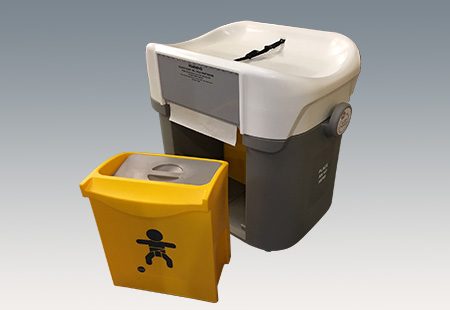
Rotomoulding is capable of manufacturing sophisticated hollow shapes with such features as:
- Complex mould split lines
- Male or female moulded threads
- Moulded-in inserts
- Side cored undercuts
- Zero draft (taper for extraction of the piece)
- A wall section from under 1.5mm to over 40mm
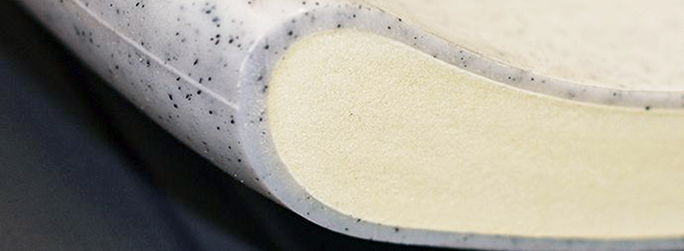
- Multilayer wall sections which can be made from several different polymers
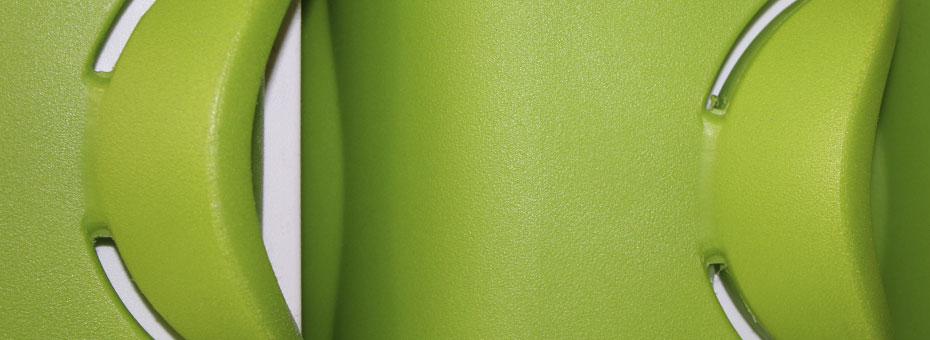
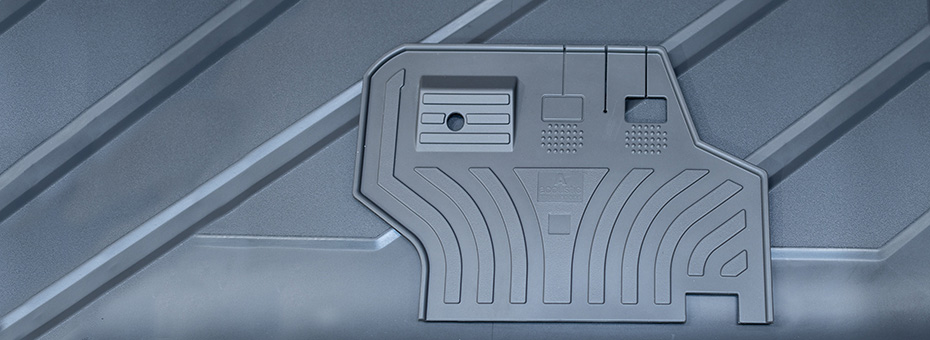
- A large range of surface finishes: texturised (by mechanical application or photo-etching), smooth, polished - or a combination.
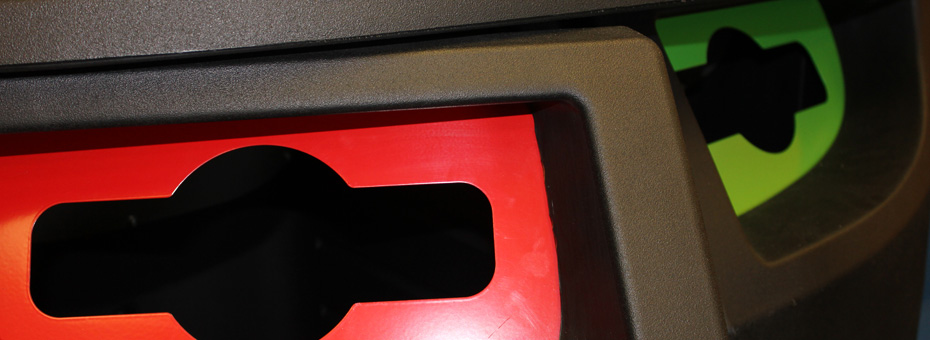
Remember also that a hollow shape can be cut in half after moulding to create two parts. Cutouts, holes, slots and the like may be created; and assemblies can be built up of mouldings and any type of bought-in component.
Some general design guidelines will be helpful:
- In rotomoulding, the raw polymer is tumbled inside a heated mould: it penetrates into surface shapes only under the influence of gravity; therefore these shapes must allow moulding material to flow easily
- Sharp internal corners and edges should be avoided as they create stress points and locally reduce the wall section
- Sharp external corners and edges, whilst structurally satisfactory, may not fill correctly and therefore not be aesthetically acceptable
- Avoid single wall sections formed onto other single wall sections; they can be injection moulded but not rotationally moulded.
Some design guidelines specific to 3-D CAD:
- Test the accuracy of the CAD data transfer before starting work on a live project. tecni-form have the facility to validate and translate almost all CAD formats, but 'fine tuning' may be needed
- You only need to provide data that defines the outside of the moulding; internal detail is not required
- Generally, it is best to omit draft angles other than natural drafting of the part due to styling. This is because draft will be affected by the position of the split line, the tooling method and the de-moulding technique - one or more of which may not be known
- Do not apply shrinkage or casting contraction to your 3-D model
- Do not omit features from your CAD model because you think that they will be added to the tool later
- You will need to provide a 'key feature' drawing showing showing various requirements like tolerances, surface finishes, and colour specification. tecni-form can help with advice on this.
A Guide for the use of 3-D CAD data to directly manufacture tooling for Rotational Moulding is available in tecni-form's Design Library. You will need to sign up to their Newsletter to access this area of the site.
A look around the tecni-form website The tecni-form website is designed to be a comprehensive resource for Industrial designers.